What to Pack for the Everest Base Camp Trek
Are you planning the Everest Base Camp Trip? The EBC trek is one of the best iconic and rewarding journeys in the world. However, it's also a high-elevation trek that requires good preparation. The trek takes you through high-altitude regions ranging from 2800 to 5,364 meters at Everest Base Camp.
On the way, you'll experience the histrionic climatic changes from dense forests to chilly, thin air. The weather can be random, ranging from warm and sunny during the day to colder at night. Suitable packing ensures your safety, security, and delight throughout the trip.
Seasonal and Climate changes during the Everest Base Camp Trek
The mountain's weather is influenced by altitude, monsoon shapes, and usual winds, leading to different seasonal and climate changes. After you land at Lukla (2860 meters/9,383feet) and descend to Chaurikharka, Thado Koshi, Phakding, and Namche Bazaar, and ascend to Everest Base Camp (5364 meters/17,598 feet). However, the highest point of this trek is Kala Patthar, which is located at 5545 meters/18,192 feet) above the sea level. Within this high-elevation range, you will encounter a diverse range of temperatures. You can check the information below, which includes all the detailed information on the trekking season and climate characteristics.
March, April, and May (Spring Season)
Spring is one of the most popular seasons for the Everest Region Trekking. The weather conditions are generally constant, with mild temperatures and insignificant precipitation. Also, known as the Rhododendrons blooming season along the lower altitude, adds exciting colors to the landscape.
- Daytime: The temperatures range from 15 to 20°C at lower altitudes, but temperatures drop considerably at higher elevations.
- Nighttime: During the nighttime, it can be 0 to -5°C, mainly above 3500 meters.
- Visibility: Generally outstanding, offering crystal clear views of Mount Everest, Nuptse, Lhoste, Island Peak, Ama Dablam, Thamserku, and many more.
June, July, and August (Summer/Monsoon Season)
The Monsoon season is getting heavy rainfalls and demanding trekking conditions in the Nepal Himalayas region. During the Monsoon, you have to face muddy and slippery trekking trails and condensed visibility. Due to rain and clouds, the Lukla flights might be canceled or delayed, adding uncertainty to reaching the Everest Region Trekking.
- Daytime: The daytime temperatures range from 20 to 25°C at lower altitudes, but decrease as altitude increases.
- Nighttime: During the nighttime, it can be 0 to -5°C, mainly above 3500 meters.
- Visibility: Generally, heavy rainfall and trekking trails will be muddy and slippery, creating challenging treks. Therefore, we do not recommend that you do the Everest Region trek in the Monsoon season.
September, October, and November (Autumn Season)
Autumn is another of the best seasons for Everest Region Trekking due to its stable weather conditions, crystal clear skies, and mild temperatures. Furthermore, autumn is an ideal time for celebration with main festivals such as Dashain, Tihar, and Chhat Prab make it vibrant.
- Daytime: Temperatures range from 12 to 20°C at lower altitudes
- Nighttime: During the nighttime, it can be 0°C or freezing at high elevations
- Visibility: Generally, crystal clear skies with magical Himalaya's views.
December, January, and February (winter season)
The winter season brings cold temperatures and snowfall, making the trek more demanding, generally at high elevations. The trekking trails can be covered with snow. If you can suffer the cold temperature, winter offers separateness on the routes and breathtaking snow-covered landscapes.
- Daytime: Temperatures vary from 0 to -5°C at high altitudes.
- Nighttime: During the nighttime, it can be -15 to 25°C above the 3500 meters.
- Visibility: Normally, there are snowfalls and cold temperatures.
Essential trekking equipment packing list for the Everest Base Camp Trek
The specific essentials for the trekking equipment packing list will depend on your preferences and the trekking season. The trekking route to Everest might also affect you. However, this is our recommendation to help you pack. But you do not need to bring everything from your home. Also, you can buy trekking clothes and equipment in Kathmandu at reasonable prices. Regarding the sleeping bag and down jacket, you can rent them.
Backpacks & luggage's
We provide one local porter for every two travelers. Hence, we advise you to partner up with a fellow trekker and pack your things in a duffel bag of over 50 Liters. You can ensure your duffel bag is waterproof. If you do not have your duffel bag, we can provide you with a company duffel bag, but you must return it when you finish your trek.
We also assume you carry a backpack for the most important documents and regularly used items such as a water bottle, camera, phone, and protein bars.
- Duffel Bag for Porter: Typically 50 – 70 Liters (shared with a fellow trekker).
- Daypack 20 - 30 Liters: Most essential documents, camera, phone, protein bars, and water bottle.
Clothing Items
When you are preparing for a trek and climbing, choosing the right clothing is necessary to ensure comfort and protection in changing weather conditions. The following list includes clothing items to bring on your trek to keep you warm and protected during the trip.
For body Clothing
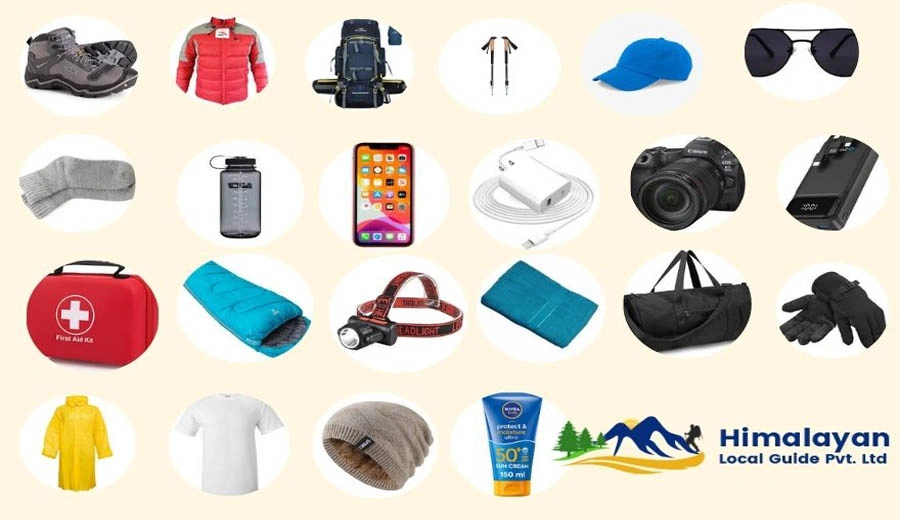
- Sleeping Bag
- Down Jacket
- Three pairs of trekking t-shirts
- Long-sleeved shirts
- Thermal Shirt for Colder place
- Fleece Jacket
- Warm wool Sweaters
- Waterproof and windproof Jacket
- Cotton Trekking pants with folding
- Waterproof and windproof pants
Head and Face
- Sun Hat
- Wool or fleece hat
- Headlight
- Sunglass
- Sunscreen 50
- Face wipes and towel
List of Footwear
- Trekking Boats
- ¾ Paris Preferably Cotton Socks
- Crampon
- One pair of extra sports shoes
Essential Gears
- Gaiters just in case snow
- Gloves and Thick Gloves
- Big rucksack above the 40 L
- Waterproof Bag Cover
- Rain Coat
- Trekking Pole (if you needed)
- Laundry Soap
- Shampoo
- Toothbrush
- Toilet papers
- Water pearls
- Bottle for drinking water
- Pen and Note Book
- Copy and Tourist Guide Book
- Camera
- Battery charger
- Memory card
- Cell Phone and Charger
- Money Wallet
- Altimeters and Playing card
Basic first aid Kid
- Diamox
- Cotton bandages
- Paracetamol
- Painkillers
- Loperamide to control diarrhea (just in case).
- Water purified tablets
- Lozenges
- Elastic bandages
- Thermometer
- Moleskin and sling.
Conclusion
A trip to the Everest Base Camp offers a unique and rewarding experience. However, autumn and spring are best for stable weather and good visibility, while summer presents lush, heavy rainfalls, and trekking trails will be muddy and slippery. Furthermore, the winter trek is freezing but offers quieter routes. So, these seasons create more challenging conditions, and you need to prepare well.
Recent Post
Annapurna Circuit Trek with Ghorepani Poon Hill
30 July, 2026
Annapurna Sanctuary Trek Difficulty
08 July, 2026